Since the dawn of time, humans have created tools to make life easier. From stone axes to steam engines, each innovation aimed to solve a problem more efficiently than before. Fast forward to the mid-20th century, and we find ourselves inventing one of the most transformative tools yet—computers.
These early computers were massive, expensive, and operated in isolation. But by the 1990s, a new age dawned: millions of relatively inexpensive machines were connected through the public Internet. To communicate, they needed shared languages—protocols and interfaces like HTTP (web), SMTP (email), FTP (file transfer), and Telnet (remote access). These foundational APIs (Application Programming Interfaces) formed the backbone of a connected world.
Today, APIs are everywhere—from your smartwatch syncing with your phone to massive enterprise systems exchanging sensitive data. But not all APIs are created equal. Many are still developed with a short-term mindset, lacking scalability, reusability, or sustainability.
It’s time for a better path forward. I would like to propose an API Maturity Model—a roadmap that helps teams build smarter, future-proof interfaces.
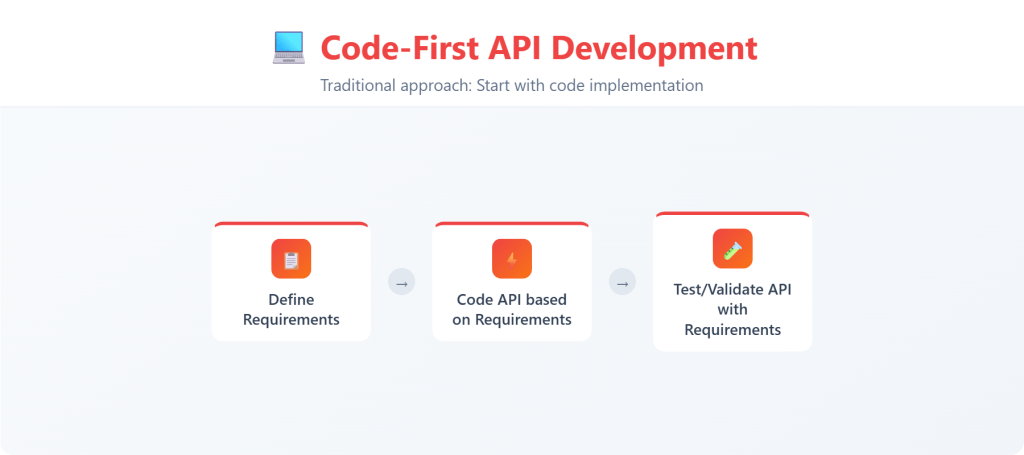
Level 1: Code-First APIs – The Artisan Approach
Most APIs still start life the old-fashioned way. A developer gets a set of data requirements, writes code on the sending system, shares it with a developer on the receiving system, and they tinker until it works.
This “code-first” approach is fine when there’s only one sender and one or two receivers. It’s fast and functional—until more systems need to join the party. At that point, chaos can ensue. Let’s call this API Maturity Level 1.
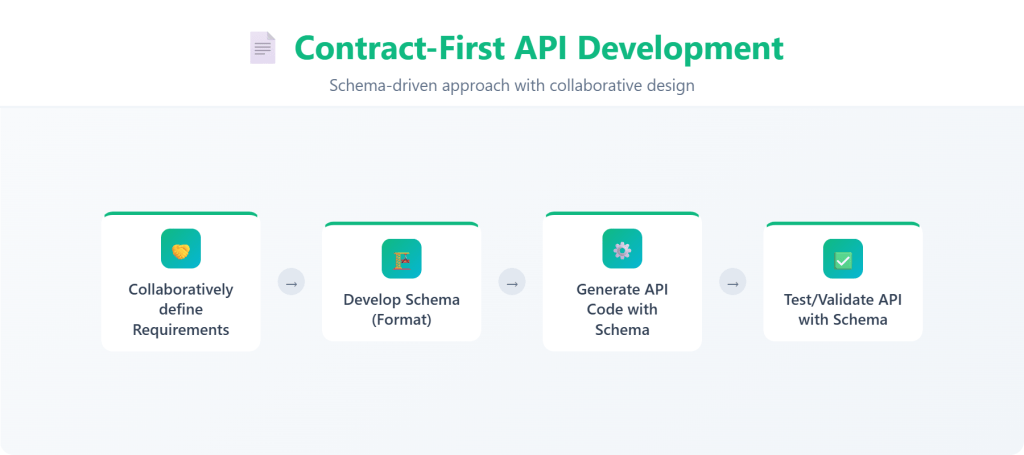
Level 2: Contract-First APIs – Building Bridges
Now imagine multiple systems need to send the same data to various receivers. If each sender codes their own API without coordination, the result is a spaghetti mess of incompatible formats.
Enter the “contract-first” approach. Here, all senders agree on a common schema—a contract. Each developer codes to that contract, allowing the system to scale cleanly across many senders and receivers. If something breaks, everyone knows where to look.
This model is the reason the web works as well as it does. Welcome to API Maturity Level 2.
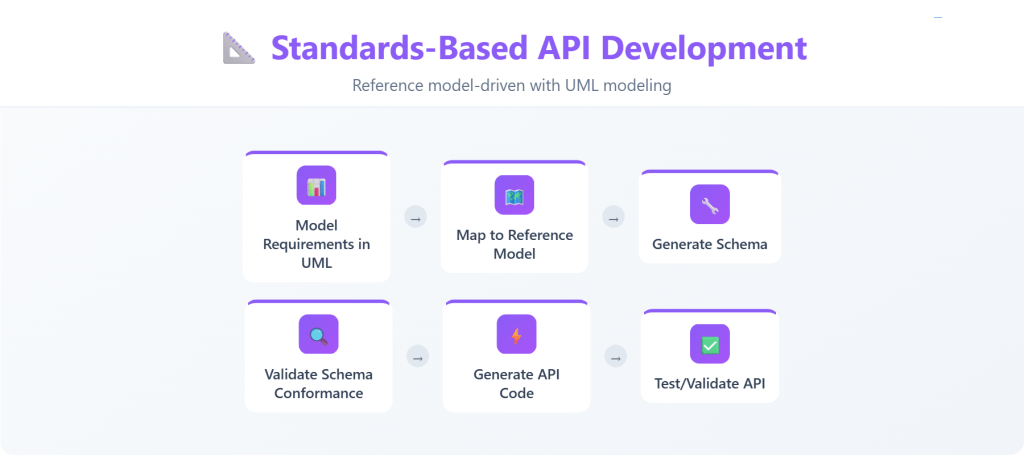
Level 3: Standards-Based APIs – Reuse at Scale
Getting multiple stakeholders to agree on a shared schema isn’t easy. But when they do—especially if they’ll need more APIs over time—adopting standards and modeling tools becomes essential.
At this level, teams use UML diagrams and reference models like those from the NIEMOpen project at OASIS Open. These tools allow teams to collaboratively define, validate, and reuse data structures across APIs, saving time and reducing duplication.
This “standards-based” approach marks a shift from reactive coding to proactive planning. It’s smart architecture in action. This is API Maturity Level 3.
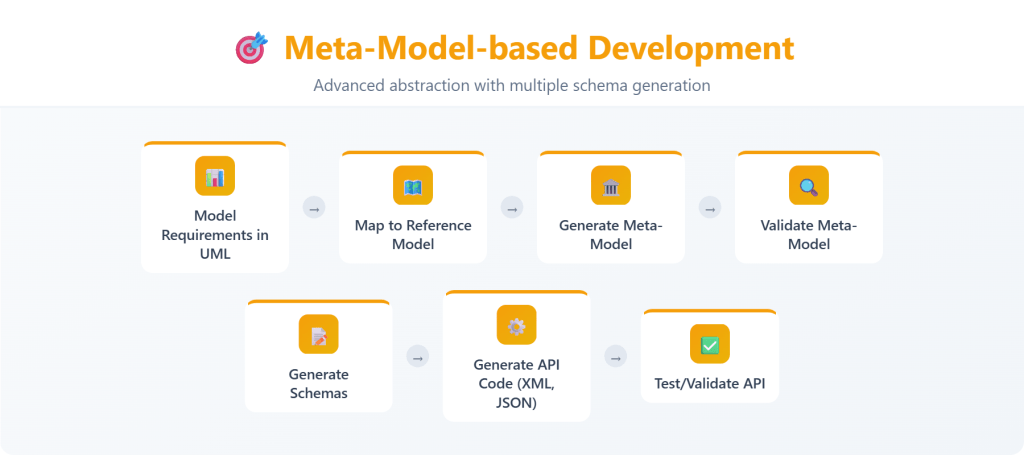
Level 4: Meta-Model-Based APIs – One Model, Many Formats
In today’s ecosystem, XML is no longer the only game in town. Developers often prefer JSON or even newer formats. But reworking schemas for every format is inefficient.
That’s where meta-models shine. Frameworks like the NIEMOpen 6.0 Common Model Format (CMF) and tools like cmftool let you define a single model and render it into multiple formats—XML, JSON, and beyond. This flexibility supports diverse stakeholder needs without fragmenting your architecture.
This “meta-model-based” approach is powerful and future-friendly. Let’s call it API Maturity Level 4.
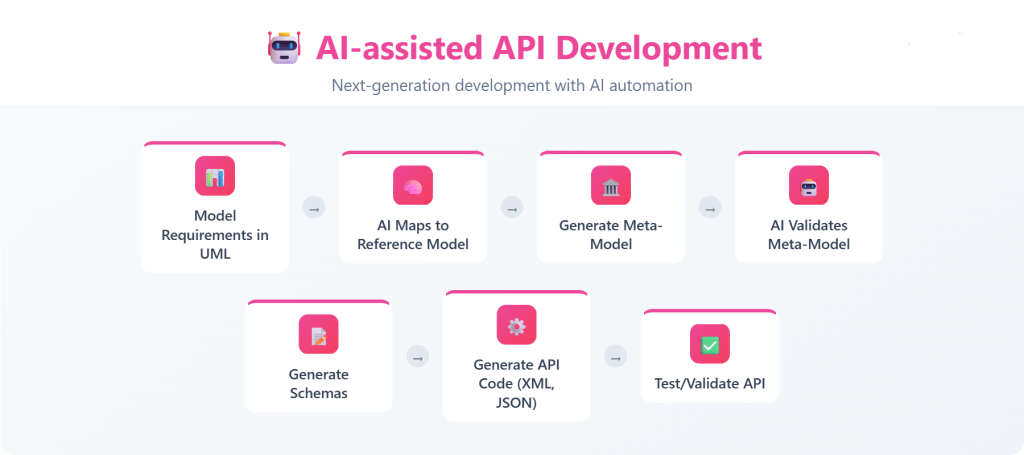
Level 5: AI-Assisted APIs – The Next Frontier
Mapping new data requirements to large, complex reference models like NIEMOpen can be labor-intensive. But now, AI agents can provide a first draft—mapping data fields to reference models and suggesting best-fit elements.
While an expert still needs to review and refine the work, AI-assisted modeling significantly reduces the effort needed to get started. This is the frontier of smart API development: API Maturity Level 5.
Choosing the Right Level for Your API
Next time your organization needs to create an API, don’t just start coding. Instead, ask yourself:
- Who are the stakeholders?
- Will multiple systems send or receive this data?
- If yes, start at Level 2 (Contract-First).
- Will stakeholder needs change or expand?
- Then aim for Level 3 or beyond.
- Will multiple systems send or receive this data?
- What data is being shared?
- Will requirements evolve over time?
- Standards and tooling from Level 3 help you future-proof.
- Will requirements evolve over time?
- What formats are required?
- Do stakeholders want XML and JSON?
- Choose Level 4 (Meta-Model-Based).
- Do stakeholders want XML and JSON?
- How will you maintain this API long-term?
- Want to speed up schema mapping and validation?
- Try Level 5 (AI-Assisted).
- Want to speed up schema mapping and validation?
Final Thoughts: Evolve With Intention
APIs are more than just code—they are contracts, lifelines, and building blocks of digital collaboration. By maturing your API strategy, you reduce technical debt, improve interoperability, and position your systems for long-term success.
The tools and models are ready. The only question is: how mature is your API strategy?
 Cabral Consulting